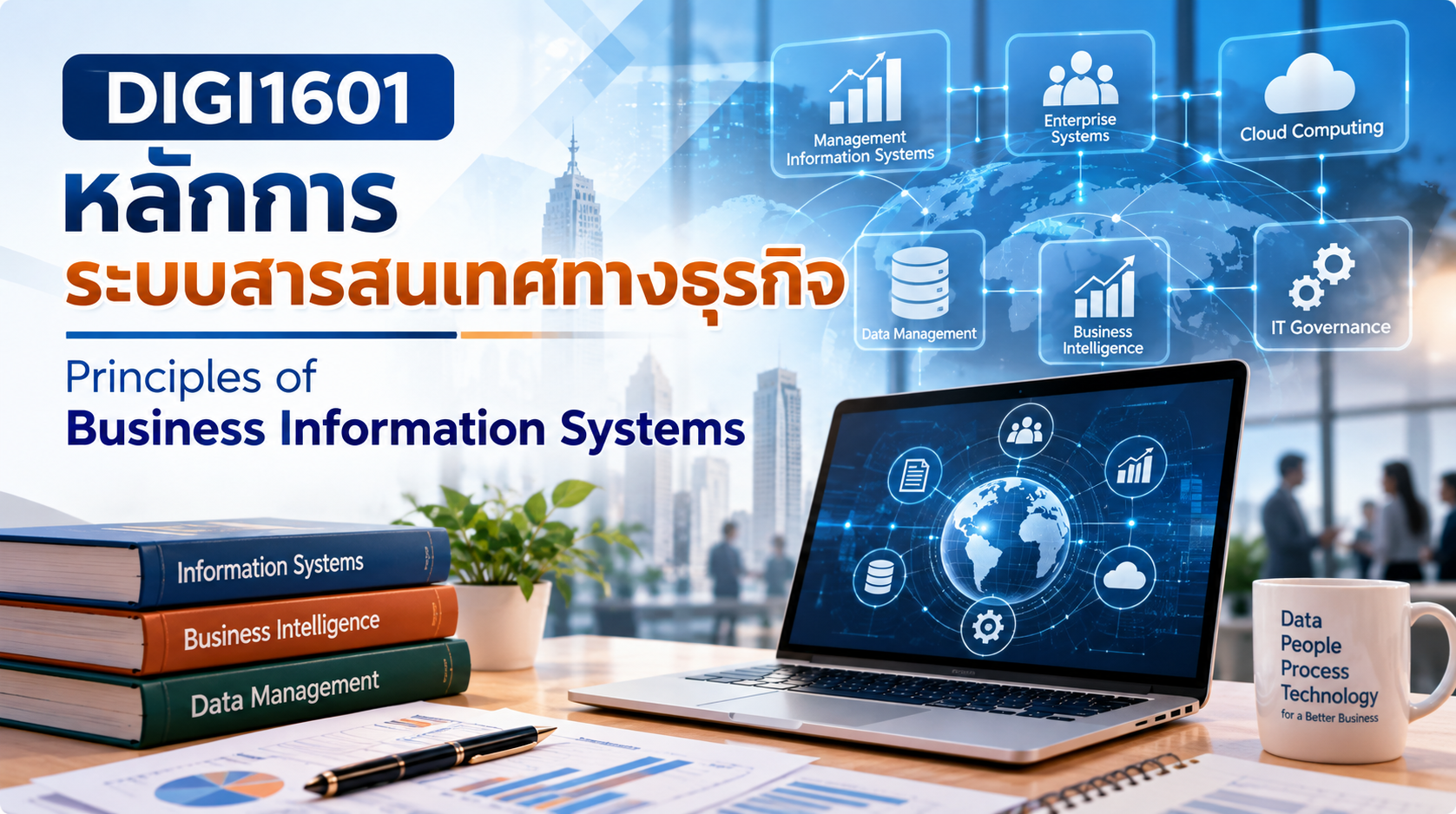
DIGI1601 Principles of Business Information Systems
Study the principles and components of business information systems, their classification by management levels and business functions, enterprise information systems, business intelligence, data management, data warehouses, data mining, and big data. The course also covers strategies for information systems adoption, development, asset management, and IT governance to support effective organizatio
What You Will Learn
Course details
DIGI1601 Principles of Business Information Systems aims to provide learners with fundamental knowledge and understanding of the concepts, principles, and roles of information systems in business operations and organizational management in the digital age.
The course covers the fundamentals of information systems, their essential components, and the classification of information systems according to management levels and business functions. It also explores enterprise information systems, Business Intelligence (BI), and information systems integration to support organizational operations.
Learners will study data management, data warehouses, data mining, and big data, as well as strategies for using information systems to support organizational transformation, information systems development processes, information asset management, and information systems and information technology governance.
The course provides a foundation for understanding and analyzing the role of information systems in organizational management, decision-making, and business development. Learners will be able to apply this knowledge appropriately in their academic studies and future professional careers.
The course consists of eight chapters:
Introduction to Information Systems
Components of Information Systems
Classification of Information Systems by Management Levels
Classification of Information Systems by Business Functions
Enterprise Information Systems, Business Intelligence, and Information Systems Integration
Data Management, Data Warehouses, Data Mining, and Big Data
Strategies for Using Information Systems in Organizational Transformation and Information Systems Development
Information Asset Management and Information Systems and Information Technology Governance
Instructor
Related Courses


- Closing Date 26 May 2027 Time 16:00
-
Please finish learning before the date and time shown — when the course closes, the classroom is cleared and your learning history for this round ends (certificates already issued remain valid).
- Instructor Asst. Prof. Kusuma Sidapheng
- Level Beginner
- Duration 2 hr. 30 m
- Lessons 9 Lessons
-
Certificates NoneThis course does not issue a certificate — when you complete it, the system will issue a Learning Completion Record with a public verify link you can submit to your instructor as proof.
- Category Information Technology and Digital Skills
- Learners 0